Showing posts with label education. Show all posts

Wednesday, September 16, 2020

Stressors


Out here in the smoke and flames, the California State University system has announced they will be online for the spring 2021 semester.  Now the wait begins to see what the University of California system and the private colleges decide to do.  There is Covid-19, the raging fires, the civil unrest, the increasingly armed and dangerous conflicts between citizen groups, and the abject, duplicitous administration in Washington.  All this and the switch to remote learning:  is it any wonder students and teachers are stressed?

Across the country, parents, students, and teachers are trying to figure all of this out.  Parents are trying to balance their new roles as teachers’ aides while continuing to work from home.  Teachers are dealing with their children at home while attempting to teach others.  Older siblings, at the expense of their own learning and course work, take care of younger brothers and sisters so parents can work at home or in person at a job site.  This means that Zoom sessions often have chaotic backgrounds and noise, with several people in the household logged on to remote classrooms.  Bandwidth is precious and often limited, knocking students off in the middle of a lesson or exam.  Students continually struggle for equipment, textbooks, resources, and a stable internet connection.  Reported absenteeism is high while some college students are withdrawing and taking a leave of absence.  In many cases, teachers must revise methods and curricula on the fly, leading to even more confusion.

The long-term consequences of all of this are clear.  There will be lasting damage as Covid-19 continues to interrupt the focused, intensive, sequential education of students.  Will these students return in a safer time?  Will they have the financial resources to wait out the virus and continue their education?  For students in their formative years of elementary education, we are looking at the possibility of a generation of disenfranchised, under-educated students who will go on to drain federal and state resources as under-performing working adults, leading to unemployment, discontent, and anger.  There is a psychological impact in addition to the physical impact on a student due to the virus and the existential threats like fire and civil unrest.  And when does civil unrest become a civil war?  We may need an answer to that question very soon.

We are especially vulnerable to high unemployment for graduating college students, even with a paradigm shift from traditional majors like English and philosophy to job-ready majors like social work, nursing, and criminology.  They will attempt to enter the workforce during a tighter economy and job market.  Will graduates be able to find employment with pay equal to their qualifications and college degrees?  Will they be financially secure enough to begin repaying their student loans?  Recovery from the impact of this disease may not happen quickly, even with a vaccine and people returning to some sense of a normal life.  Normal may be a relative term in the post-Covid-19 world.

There are far too many unanswered questions regarding what will happen between now and November, or now and January.  The problems Americans face will not be resolved immediately with a new president or a different party in control of the House or Senate.  To get out of this mess, we will need new, strong, consistent leadership and planning.  It will take a herculean effort of ordinary people pulling together in a united front for the good of the nation.  We have been able to pull that off only on very rare occasions in the past.  Does America have what it takes to pull itself out of such a deep hole this time?

What we are in now is survival mode.  We are trying to keep the ship afloat, but the water is rising.  In the last few days, it feels as if our survival mode is slipping slowly toward anarchy.

With all of this, and trying to educate and be educated, I ask again:  is it any wonder teachers and students are stressed?


Sunday, September 6, 2020

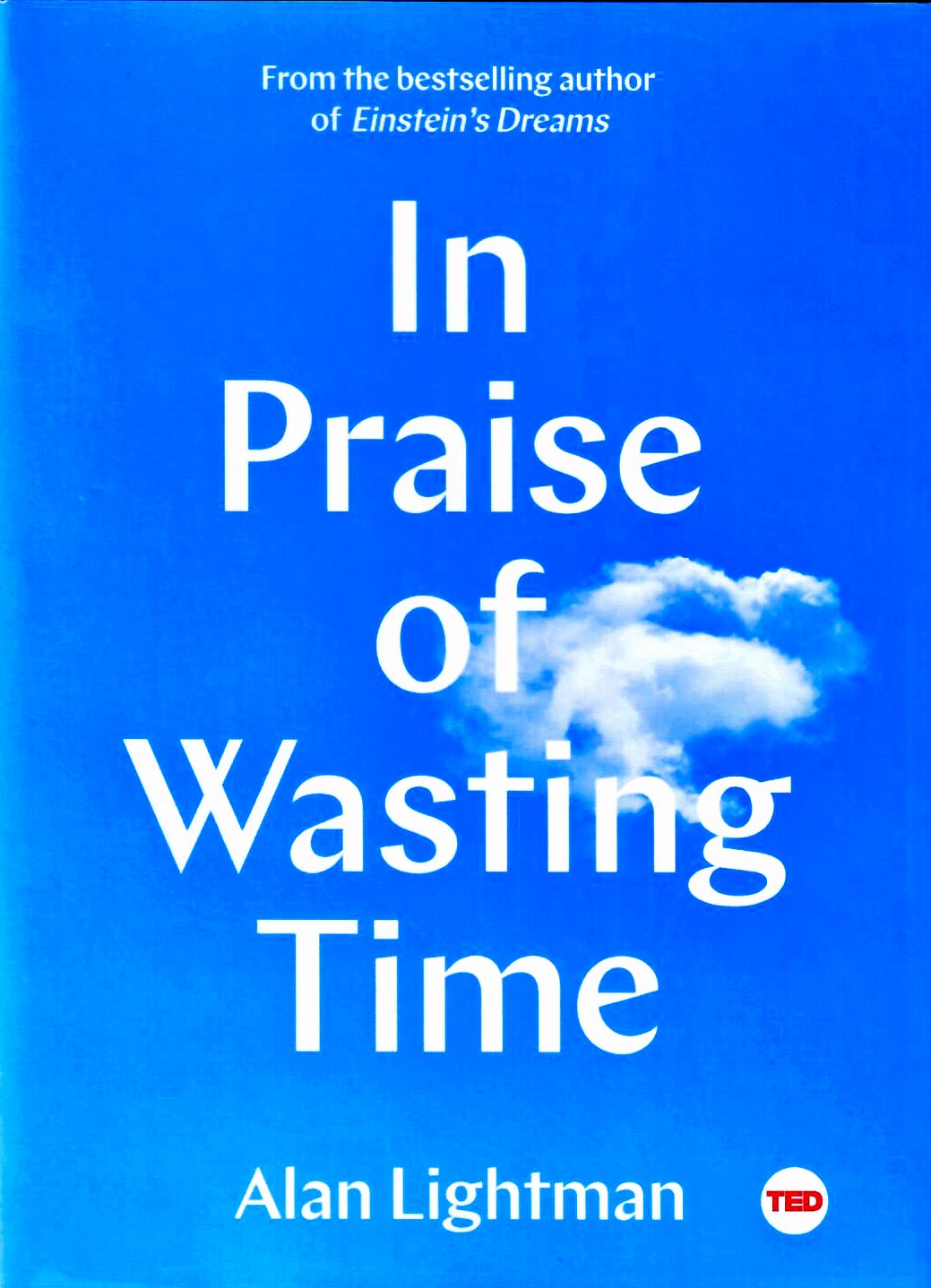
In Praise of Wasting Time by Alan Lightman


For several semesters now, I have become alarmed at the large number of college students who tell me they have panic disorders and chronic anxiety.  I feel for them.  Alan Lightman, in his book In Praise of Wasting Time (TED Books/Simon & Schuster, 2018), argues that in our lives today we simply have no time or space to process what’s happening and what’s demanded of us, much less learn difficult lessons and concepts.

Suffice to say everyone is stressed.  For college students, they have no time to digest material and fully comprehend its importance.  Lightman, a physicist and writer, blames our “wired world,” including the internet, social media, and the “frenzied pace and noise” of daily life with all its increased expectations.  He cites a Pew survey that found the average American teenager sends or receives more than 110 text messages a day.  Anecdotally, I have stepped on the college elevator and found every person tapping away or swiping on their phones:  an eerie quiet with only the tap, tap, tapping of fingers on a screen.

I often ask students about the obstacles to achievement in their college lives.  There are predictable culprits:  lack of preparation in high school; the difficulty of their course load; lack of time to study; working too many hours.  The surprise on the list, quite near the top of every survey, is loneliness, yet, we live in the communication age with smartphones that constantly keep us connected.  People, Lightman notes, take their laptops and iPads on vacation with them to check email.  Some students sleep with their phones on their chests, he says, and almost everyone keeps it within arm’s reach every minute of the day.  Yet, students fear feeling lonely.  Keeping the phone close by is one way to combat that loneliness.

On an academic level, students have never been taught to prioritize the information flooding through their devices.  Lightman says students desperately need better critical thinking skills to analyze how information fits into history, culture, and current events.  Students cannot think laterally; information comes in without connection to other areas or synthesis into thinking and writing.  It seems like no one is asking the question, how does what is learned connect to the larger picture?  What is the historical, human, social, or philosophical context?  This flood of information, this constant “breaking news,” only adds to the anxiety and uncertainty.

Lightman breaks down the kinds of thinking we need into two categories:  divergent and convergent thinking.  In the former, we have the “ability to explore many different avenues and solutions to a problem in a spontaneous and non-orderly fashion.  In convergent thinking, we have “the more logical and orderly step-by-step approach to the problem.”  Divergent thinking is critically essential to Lightman’s view that we need more time to analyze this flood of information and decide what is important.  We need time to breathe and time for silence and reflection.

I tell super-stressed students to plan their day with time for their studies and time for recreation.  Many are surprised to hear that, but I insist:  schedule time for recreation, to sit and stare off into space, and do not be intimidated by those who would call that wasting time.  Lightman has some insightful things to say about this, including that procrastination, the problem most identified by struggling students, might actually be beneficial.  It is only in the wired world that we must focus our attention on demand and take immediate action.  We cannot allow circumstances to bully us into leaping before carefully thinking through all considerations.

Lightman cites social psychologist Graham Wallas, who broke down the stages of creative thinking to:  preparation, incubation, illumination, and finally, verification.  This is also the way we learn.  We prepare by learning material; we allow the material to percolate in the brain; we come to a place of insight and understanding; and then we verify what we know through a test or evaluation.  This process takes time, and each student has a method that is unique to his or her character.  The way we study is dependent on how each of us learns.

Many students live with multiple people in the often small spaces they call home.  It is difficult to have a dedicated study space and have the time to think about what they are learning in silence and solitude.  Lightman advocates for the necessity of solitude as a condition critical to learning and understanding.  He says he has encountered many scientists in his field (physics) and artists (he is the author of the novel, Einstein’s Dreams, among other works), who “embrace solitude.”  They “practice their craft in solitude.  They draw strength from being alone…”  Students, then, should not fear loneliness.  It is a tool to enhance their studies and can be counterbalanced by scheduling time with friends or loved ones after periods of intense, solitary concentration.

Alan Lightman’s book has implications for how we live and learn.  The pace of our lives and the cascade of information we receive each day will never diminish.  What we can do is learn to slow down every moment and commit ourselves to a life of contemplation with periods of silence and solitude.  We can also leave our screens in other rooms and stare off into space as a critical method of thinking and learning.  Who knows what discoveries we will make while appearing to waste time.


Monday, August 31, 2020

How To Write A Personal Statement


It is never too early to think about writing a personal statement.  You may be asked to submit such an essay for graduate school, an internship, or to be part of a research lab or project.

Students often face writer’s block when crafting these essays.  “My story is not interesting,” they say, or “nothing has ever happened to me?”  Often students compare their situation to others and find their own essay lacks excitement and life-changing epiphanies.  Do not fall into this trap!

There is an old writing cliché:  a story is only as good as the person telling it.  You may think you do not have a story, but you do.  And events that seem mundane will take on importance when you tell that story.  Most of life is composed of little moments, not big, earth-shattering thunderstorms, and these little moments often carry the weight and heft of a life-changing experience.  It is, truly, all in the telling.

Begin by thinking of the events in your life and how you came to be where you are.  When we look back on the past, we often see how, even in the most confusing times, there is a pattern.  If you had not met this person, you would never have had that experience.  If you had never taken that class, you would not have discovered this about yourself.  Look for those transcendent moments.  Again, to be significant, the moment does not have to be “the day I had brain surgery,” or “the time I traveled through Europe.”  If you have had moments like that, certainly use them, but just as easily, you may have had a favorite moment when you last gathered with your family or the time when you had an encounter with someone who made you see the world differently.

Next, begin writing.  No outlines or pre-planning; just write and let your mind go.  No judgment, no saying, “This is horrible.”  Just write.  This may take several sessions over a few days.  You might write thousands of words before you find the story you wish to tell.  Literally, throw words onto the page and see what sticks.  Once you have material written, begin highlighting blocks you might want to elaborate on and develop into something more full and complete.  Remember, the audience for this writing is a scholarship or admissions committee; they want something more from you in the personal statement than what they will know from your grade point averages and letter grades.  Who are you?  If there are times in your history where you did not do as well as you’d hoped, or when you faced a setback, a personal statement is the place to explain what happened and, more importantly, what you learned from the experience.  Committees are not interested only in the good things that have happened to you.  They want to know how you faced adversity, how you struggled with change, how you made mistakes but learned from them.

It is important while you are doing this prewriting to research the program to which you are applying.  Know the research being done in the department and the professors who are coordinating the work.  Your statement should incorporate your research.  Ask yourself what is my goal in applying to this program?  Then work that into your statement as well.  Committees like students with strong goals and objectives.  Go to the library and read the latest research in that particular area so you have knowledge to back up your goals.

Passion is imperative.  What do you find exciting about this program or research?  Make sure to include the experiences you have had that led you to this next step.  You might have discovered this area in a required course, but describe what makes you want to pursue this area in more depth.  Don’t just say, “I want to help people,” or “I want to give back to the world.”  Those are noble sentiments, but it tells the committee nothing but the most common clichés.

This is only the beginning.  Be prepared to write and rewrite.  Take each word, each sentence, and work it to perfection.  Every line must convey meaning and insight into your character and abilities.  That comes with time and revision.  The first draft will never be the only draft if you expect to succeed.  Get input from trusted friends who know you and your passions.  Seek help from your advisors and professors.  The professors might be called upon to write letters of recommendation, so letting them know your career and research plans will help them understand what you want from your future educational pursuits.

Don’t be discouraged.  Good writing takes time and effort.  This may be one of the most important essays you write in your education.  That is no reason to be blocked; it means you must revise and rewrite obsessively to make the statement sing.

So make the commitment today to get started.  No procrastination!  You cannot see the shine until you have started polishing.  Pick up the pen, open the laptop, and begin.


Friday, August 7, 2020

Leaning Into The Fall

 I am trying my best to be positive.  I have examined several angles objectively.  I want to see this as an opportunity rather than an impossible situation.  But I am still really anxious about how classroom teaching will be affected as we go into the fall semester with the pandemic.

I am concerned about primary grade students missing out on their formative education so critical to advancement and success.  Yes, it very much begins in childhood with fundamental lessons in math, English, history, science, and the arts.  For most people, the groundwork to become a life-long learner starts in early childhood education.  How will the teachers keep everyone focused and on task?  How will they be able to assess student progress and make crucial adjustments?

A teacher I know in a Catholic school told me the diocese wants her online with students for at least six hours a day, five days a week.  I have been on a three hour Zoom meeting and had trouble staying focused.  Will a nine or ten year old have more stamina?  She wondered how individual class work or group projects will be managed.  She is scrambling to research online tools to assist her.

Another Catholic school teacher began issuing weekly packets of work to her students when the stay-at-home orders were initiated in March.  Students and parents picked up their packets at the start of the week and did a sort of drive-by homework submission on Fridays when she would stand out on the playground and collect the work as the cars drove through.  Of course, students completed the work, but she questioned how much was learned from the process, since most students need a combination of teacher-directed work with individual assignments and group projects.  She utilized only one method and regretted it.  Now she is trying to figure out how to involve multiple methods and be more effective as an educator with the limited resources provided by the diocese.

A third teacher set up a studio in her empty classroom with camera and lights.  Then she taught every day to an empty room.  This did give the day a schedule and rhythm that kept students on track, but she said that without being able to see body language and reactions, she was not sure if she was reaching her students and giving them the same education as she would have if they were physically present in the room.  Also, she had no control if students shut down their video and left their home study area.

One issue here is that we are asking students of all ages to be self-directed learners.  College students who are making an often expensive financial commitment to their education are in the age range of those who seek out learning opportunities, although this does not mean they won’t take a short cut.  Primary grades and high school students have to be taught the discipline and must be taken through the curriculum.  It is called compulsory education for a reason.  If not compelled, it is very easy to tune out and log off.

Many students talk about limited computer resources and even though school districts have tried to make arrangements for them, the difficulties remain.  My college students talk about sharing computers with other family members and having limited Wi-Fi, bandwidth, and hotspots for internet access. Many are accessing their Zoom class meetings and doing assignments with their smart phones.  Beyond hardware issues, students must also download and install programs to allow them to utilize course materials.  They also need access to books, libraries and research materials over the internet.  The logistics can be problematic even in the most ideal situations.

Several parents I have spoken with are worried they will not be able to fill in the gaps in learning when they work in partnership with teachers.  It is putting an overwhelming burden on them to handle their own work from home to continue to make a living and also help their children complete their assignments.  Most admit they are not teachers; they have no credential classes or classroom teaching experience on their resume.

To keep students focused, to provide them with the foundations for continuing their education, and make their learning experience as rich as it can be given the circumstances, those are goals that will require constant adjustment and assessment by teachers and parents in partnership.

Schools provide many services outside of class, like food distribution, counseling and health services, afterschool programs, and parent education.  With empty campuses, can these services be offered the same way online?  Education has layers of essential services beyond simple instruction.  Will it ever be safe to go back to these campuses?  Has education changed forever?  It will take trial and error as well as objective evaluation to determine best practices, and more will be decided in the spur of the moment to meet a crisis than we are probably comfortable with, but we must keep going and make adjustments as we go along.

We have no choice but to try to reform American education on the fly.  Right now, to be in a classroom with a teacher and other students is not safe for anyone.  As summer days dwindle down, the task ahead of us will require vision and strength. I can only hope we are up to the challenge.


Wednesday, August 5, 2020

Zoom Into The Future


Yesterday, we did a workshop over Zoom for incoming college freshmen.  We figured it would be a good practice run for the upcoming semester, but I realized we have a lot to learn to make this go smoothly.

We had 32 students enrolled in the workshop.  I adjusted the video settings so I could fit up to 49 participants on screen and see each face with a name.  That was a benefit because instantly, we had names and faces so we could call on them.  We ask them to keep their microphones muted until they were ready to speak.  Right from the start, the “raise your hand” feature did not work as well as we would like.  It seemed to be better just having them key their mic and take turns contributing.  Only occasionally did they talk over one another, but most realized someone else was speaking and waited their turn.

So we could see everyone, we had names and faces, and when we asked a question, they responded.  We even went through all participants to find out their majors and what they were anticipating for the coming school year.  At one point, I had to share my screen with the participants to show a PowerPoint presentation.  I was able to get the PowerPoint up and running and all students had access.  During the presentation, we needed to play a short clip from a YouTube video embedded in the PowerPoint.  It did not work.  The students could only see a blank screen.  This caused some anxiety because the video was important to the workshop.

We wanted to pause after the video and launch a discussion.  Since the video was a no-go, I switched off the shared screen and went back to faces and names.  Teachers always need a “Plan B” in case something goes wrong.  We still had a good discussion, and each student who wished to speak waited for one to finish before unmuting and offering a comment.  There was a slight delay as we switched from one speaker to another.  This does remove some of the spontaneity and free flow of ideas due to delays, but with practice, I think it will be better.  I did not realize how much I relied on physical cues from my students, their body language, their facial expressions, to know if I was reaching them and making sense.  With practice, our discussion and interaction will be more seamless and less hesitant.

After the discussion, we had one other video clip we wanted to show to finish the presentation.  I shared my screen again, but it too failed to play.  I made a note to research this later.  We ended the presentation, the students thanked us, and we signed off.

Our goals for the workshop were simple:  we wanted students to learn ways to be socially and politically active, to transform their classroom learning into social justice, to learn the history of social engagement and activism at the university, and to develop cultural and political awareness in everyday life.  Each of these objectives needed discussion and input from the students.  It could not be a one way presentation.  This discussion methodology is how I teach all of my classes, so overcoming the limitations of Zoom so the ideas flow freely without delays will be critical to future success.

This experience was not perfect.  We now must evaluate on two levels:  were the students drawn in by the subject matter and did they remain focused throughout?  And, did the platform and features function as we wanted?  Before this, I needed only worry about the first part.  Now, both must be practiced to ensure success.

The question remains, is holding class remotely equal to the face-to-face experience?  It is a different experience, but not less.  The key is using the technology to its fullest potential.  I want to cut the lag time between question and answer.  I want the free flow of ideas.  It is possible, I believe, with practice.