Showing posts with label literary criticism. Show all posts

Monday, July 20, 2020

Missing the Voice of John Leonard


In these days, in these times, I look around my bookshelves and realize how much I miss certain voices.  One of those is John Leonard, cultural critic extraordinaire.

Leonard spent some of his formative years here in Los Angeles.  Later, as a Harvard dropout, he found his way back to California to finish his education at the University of California at Berkeley.  On that campus of simmering liberal ideas, he became a leftist but graduated to become a protégé of conservative William F. Buckley at the National Review.  It is the rare paradox of a writer on the left encouraged and published by an editor/writer on the right.  This collision of ideas made for a frisson of excitement for readers.  Leonard honed his syntax and vocabulary, becoming a distinctive voice in the wilds of America, a cultural critic of considerable heft and importance.  He died of lung cancer in 2008.

My remembrance of him over the weekend ignited when I looked through my ideas file.  This is a manila folder full of news clippings, articles, pictures and other paraphernalia that I might want to write about in the future.  I fill up these files—maybe four or five a year—and keep them in a file rack near my desk.  Periodically, I glance through the material slow-cooking there and when something seems ready to go, I pull it and have at it.

In this case, I found an article by Meghan O’Rourke from the Columbia Journalism Review dated January/February 2007.  The reporter calls Leonard a literary prodigy.  At 32, he became editor of The New York Times Book Review and went on to write for an incredible range of outlets both on television and in print.  His prolific career is something of a marvel.  O’Rourke writes that Leonard is “the discerning enthusiast, the Saturday reviewer who has read far more than most people and who writes about his discoveries with greater attention, insight, and felicity of self-expression than most of us can muster on any day of the week.”  He is quite simply “our primary progressive, catholic [small c] literary critic,” she concludes.  Never, though, does Leonard dumb down his criticism and writing style.  O’Rourke compares him to the music critic Lester Bangs, another cultural taste-maker of the time.

What makes Leonard’s voice unique is the way he mines the connections among the singular subjects:  books, movies, television, class, politics, history and society.  Everything is everything—the web of human endeavor, the synchronized gears in the oversized pocket watch of us.  Every click and clack for Leonard became his métier as the years ticked on.  He made sense of the world, and that kind of work is so necessary to human beings locked into the gritty reality of everyday living.  His work is nothing short of a gift to the thinking individual who is always on the lookout for enlightenment, wherever he or she might find it.


My favorite John Leonard book is The Last Innocent White Man In America (The New Press, 1993).  I find myself dipping into it occasionally, maybe three or four times a year, to read over the highlighted sentences with reflections in the margins.  Each reading brings new insights, even while the marginalia notates my changing nature as a reader and a human being.  Leonard’s voice is so strong across the years.  “For a living,” he writes, “I chase the ambulances of the culture,” a mission statement of brevity and wit.  How did he start?  “The library is where I’ve always gone—for transcendence, of course, a zap to the synaptic cleft, the radioactive glow of genius in the dark; but also to get more complicated; for advice on how to be decent and brave; for narrative instead of scenarios, discrepancies instead of euphemism.  In the library, that secretariat of dissidents, they don’t lie to me.”  In a culture full of liars and criminals, these are fresh words, a poignant and potent reminder to see, to think.

Leonard is known for trumpeting the work of other writers.  He is almost entirely responsible for the rise of Toni Morrison, a writer he could not praise enough.  A white man who shouted and cajoled until everyone was reading this Black artist and her writing, a gift to the world.  He loved Joan Didion; he wrote the introduction to her Everyman’s Library edition of her collected nonfiction.  “It’s too bad Joan Didion went to press with After Henry [a collection of essays] before the L.A. riots,” he writes.  “She’s just the stylist for them—a seismograph registering every tremor on the culture’s fault line, alert to every paranoid vibration, crouched there in the blank uneasiness like a gryphon, lion colored, eagle eyed, waiting for the Big One:  a Manson or a quake or anything that scourges Malibu.”

He was, without a doubt, not just a literary critic.  His indictments were pointed and pungent.  “Perhaps the child in you recalls cherished teachers in classes that weren’t overcrowded in buildings that weren’t falling down in neighborhoods that didn’t look like Beirut, when education was about distinctions and connections, about surprise, wonder, passion, regret and citizenship, instead of drugs and guns and AIDS, back when the public-school system was a trampoline, from which we bounced into the future, instead of a detention camp for refugees.  In this day and age, another child drops out of the public high school warehouse system every eight seconds.  Of those who stick with it, 700,000 graduate each year unable to read their own diplomas.”

John Leonard:  the age of Trump, of COVID-19, of ignorance, rage, and narcissism needs you now.  But in this silent vacuum, we must all get along as best we can, liars be damned.


Tuesday, July 25, 2017

Writing Was [Is] Everything


Just four years before he died, Alfred Kazin gave the William E. Massey Sr. Lectures in the History of American Civilization at Harvard University, joining the likes of Eudora Welty, Irving Howe and Toni Morrison who had given past lectures.  His words were gathered together and published in the slim volume Writing Was Everything (Harvard University Press, 1995), now very difficult to find except in used copies.  But what a gem.

I have been looking for the book for years now, and I had suspicions it was in my storage unit with a couple thousand other books.  So when I cleaned the unit out this summer, I was overjoyed to find my pristine copy tucked away in my box with Samuel Pepys, Samuel Johnson, and Samuel Clemens—don’t ask me why old Alfred was boxed up with the Samuels, but there he was.  Immediately, right there in the dimly lit hallway, I started paging through and reading snippets.

“If there is a writer who is not filled with fear and trembling as he begins and begins and begins,” Kazin writes near the end of the book, “he has to be an amateur.”  Kazin here is building to a climax and rhapsodizing eloquently about the importance of good writing in the realm of cultural criticism.  He holds up the great Polish poet Czeslaw Milosz and his words from the “burning city” where he was not sure “anyone would survive to read him, but he wrote anyway.”  Milosz did the only thing he could:  write.  “Morally and imaginatively,” says Kazin, “he could not live without the connections writing makes, without believing in his heart that somehow, somewhere, despite the cruel wisdom of the age that nothing is less probable or perhaps less desirable, all lines do intersect.”

This is the beauty of this book:  it is a genuflection to the power of criticism; it is a tribute to the lost art of cultural discussion.  The book is called Writing Was Everything, but really it should be Writing and Reading Are Everything.  Kazin is a man reaching back to revel in the years, deeply reflective and wise.  He tells us the best critics are poets and the best practitioners were “Samuel Johnson, Wordsworth, Coleridge, Keats in his letters, Emerson, Baudelaire, Ezra Pound, T.S. Eliot.”  They wrote about books to “change the direction of literature.”  Criticism had cultural currency; it was important work.  Look around today and such criticism is disappearing.  The publications that shaped the 20th century critical mind, that published people like Kazin, have disappeared or they are mere shadows of their former selves.  It is difficult to know where people like Edmund Wilson and Edgar Allan Poe (a difficult and cantankerous critic) would publish today.  There are a few beacons of hope:  The New York Review of Books (minus its dearly departed editor, Robert B. Silvers), The New York Times Book Review; The New Yorker; and The Atlantic.  Others can be found by doing a quick Google search.

What we have now, Kazin notes in his time, is a professional class engaged in telling other people “How To Read.”  And these critics are academics who are “riding herd on students who are so unused to general reading that they have little taste of their own and are glad to be told how to read, especially what to discount.”  If this was the state of things in 1994, what would he say today?  Students that I have encountered not only struggle to know how to read different texts, but really have no time for recreational reading.  They utilize social media, television streamed to the computer, and movies.  The reading they do for their classes is reading for information.  They are skimming through things to glean the facts for the test.  There is no depth, no shaded or nuanced understanding.  Kazin believes there is a dearth of true criticism which is “the ability to state preferences, to make choices on the basis of what is said in the only way available to that particular writer to say it.”

Kazin cites George Orwell’s theory in the essay, “Why I Write,”  that the writer’s “subject matter will be determined by the age he lives in—at least this is true in tumultuous, revolutionary ages like our own—but before he ever begins to write he will have acquired an emotional attitude from which he will never completely escape.”  Right here, right now, we are in danger of never having that emotional attitude.  We are slack-jawed and drooling in the free-falling catastrophe of an under-developed intellect.  We are not engaged with ideas much less with reading and writing.  It is all narcissism and boredom.

We cannot even have a discussion about political correctness; those have become fighting words.  Kazin saw the beginnings of the coming language apocalypse:  “Only in an age so fragmented, so ignorant of the unlosable past working in us can presumably literate persons speak of Dante, Beethoven, or Tolstoy as ‘dead white European males.’  It is true that literature can no longer be regarded anywhere as the truth about human existence.”  He goes on to write that “It is true…that literature is besieged by movies and hijacked by television, so commercialized that the million-dollar advances handed out to macho spy novelists makes life difficult for quieter talents.”

Kazin in his notebooks found himself wondering why printed words had such an effect on him.  Why did writers write the way they did?  Literature was a problem to be solved as well as entertainment for the imaginative mind.  Everything begins with a question.  That was how he started as a critic.

As for economics, Kazin has this to say:  “A son of the immigrant working class whose parents were tortured by poverty, I hardly needed the depression to be suspicious of moneyed power, or to see that in this society money is the first measure of all things and the only measure of many—or to learn for myself that there is no way in America of being honorably poor.”  Today with all the border wall nonsense and travel bans, one cannot be “honorably poor” or the “son of the immigrant working class” without being held up for undeserved shame and ridicule.  It is Kazin’s fervent belief that “art invents truth better than any document can,” and therefore, literature could be the great equalizer for us as it has for generations before us.  Of course, when Kazin combines a discussion of immigrants and working class, we see his roots in the communism of the early 20th century.  He faced criticism in his time for his political positions, but that is what comes with a life of the mind.  Critics like Kazin, Sontag, Chomsky, challenge the status quo.  They dare to consider all possibilities and explanations.  They dare to think.

All this from Kazin’s little book of lectures.  “In his pages,” he tells us, “literature and life are necessarily intimate.  The one lesson as a critic I seem to have been born with is that no storyteller can escape that intimacy.”  In this age of information, we have lost that intimacy with our own lives.

I continued my reading at home, all of this is swirling around in my head as I stayed up late into the night soaking in his words.  For Alfred Kazin, it was a century of ideas.  They faced horrendous and bloody wars, weapons of mass destruction, unspeakable atrocities.  They also saw the first human beings to leave earth and land on the moon.  We cured diseases.  We developed institutions dedicated to helping others.  No doubt, we in the 21st century have had our trials already.  We need thinkers and cultural critics to help us grow, to make us aware of life and its possibilities, and yes, to hold a mirror up and tell us this is who you are.  Quite simply, we need critics like Alfred Kazin to help us see the world clearly.


Tuesday, August 11, 2015

Where I'm Reading From


Unless you are the late John Leonard, the symphony-of-words book reviewer whose essays and reviews on culture and the life of the mind appeared in literally every major publication in the universe, your collection of reviews assembled in a book will probably gather dust in the remainder bin.  (To find such a bin, you would first need to find a bricks and mortar book store).  Thankfully, critic, novelist, translator and essayist Tim Parks opted to address a particular theme in his latest book, Where I’m Reading From:  The Changing World of Books (The New York Review of Books, 2015) rather than collect his voluminous, challenging, thoughtful reviews from the pages of the NYRB.  And the tome could not have arrived at a better time, seeing that a number of articles have appeared in a variety of publications recently bemoaning the loss of interest in long form journalism and essays.  Everything now must be boiled down to a Twitter post—as few characters as possible with points added for a clever picture or meme.

In his own four movement symphony, Parks breaks down the book world as it has come to be in the second decade of the century.  He begins, aptly enough, with an examination of the world around the book, particularly, how narrative speaks to the human condition.  For one, in this brave new world with all its blogs and Tweets and fifty shades of grey, will anyone even pay to read what has been written with urgency and importance?  More to the point, will writers still write if they are not paid, because that is exactly what’s happening at the sites of news aggregators.  A writer these days should be honored that an essay appears on the Huffington Post.  Payment?  You must be joking.  But you cannot eat or clothe yourself when you are forced to give away your work.  Worse, it would seem that the narcissistic promotion involved in posting some self-proclaimed, brilliant thought makes everyone a writer.  Singlehandedly, the digital age has devalued the well written essay, the long form piece, the wise novel, the thoughtful critical review written by someone who has studied the art and recognizes its place in the culture.

Parks observes that there is a growing gap between academia and the common reader.  Academics write for a selective audience of a few people, couching their ideas in obtuse and needlessly jargonistic lingo.  Publishing for them is a means to an end:  secure a job and hopefully, tenure.  It does not matter how many of their books are sold or if anyone outside of the rarified circles in which they roam actually reads their work.  The writer on the street creates because he or she wants readers.  And now, more than ever, the writer must love the work because most often, there is very little money to be made from it.  In our culture, information is shared freely, and with the exception of an occasional pay wall or subscriber-only access, most readers find what they need on the web and want it in as brief a dose as possible.  He concludes that “What seems doomed to disappear, or at least to risk neglect, is the kind of work that revels in the subtle nuances of its own language and literary culture, the kind of writing that can savage or celebrate the way this or that linguistic group really lives.”  Of course, Parks is a translator of literature as well as a reviewer and practitioner of the literary arts so he is deeply sensitive to how the word travels through languages and linguistic rhythms around the globe.  And he is correct:  we have no patience for the intricate story, the deeper essay.  We have too many other things to do like update our Facebook status.

One issue within this discussion of readers that Parks addresses is the homogenization of languages—namely, English is becoming the world’s voice.  He quotes David Crystal’s book, Language Death (Cambridge University Press, 2002) that “by 2100 between 50 and 90 percent of the world’s languages will have disappeared.”  So we are not just losing readers and writers; the entire paradigm of language and ideas is changing.  Most people become readers because they have been encouraged to do so as children.  The emphasis on books and writing is modeled by parents and those who have books in the home and actively see their parents engaged with a text are more likely to become readers themselves.  Yet, how many parents are actually encouraging this deeper engagement with a novel or book of essays?  Like their children, given a free moment most people focus on their phones, reading texts and Tweets and studying pictures, including the inane selfies.  If it is true, as David Shields says in quoting Montaigne that “Every man contains within himself the entire human condition,” the kid who nearly ran into me in the mall while frantically tapping on his phone demonstrates a bleak and distracted snapshot of the human condition.

Most days it seems that our culture has descended into a morass of gossip and irrelevancy.  Why is Donald Trump getting so much publicity?  Well, he is a blowhard who will say anything and insult anyone to keep his ridiculous hair and blustery face front and center in the media storm, and guess what?  It works.  CNN cannot get enough of his antics giving him a nightly forum to spout his ignorance.  And America loves it.  We want the reality show.  We want to elect him president.  The press conferences, state of the union addresses, the inaugurations, all will be vastly more interesting because the whole country cannot wait to see what Trump says next.  But there is no depth there.  He is as insubstantial as his wispy comb-over.  He trivializes American politics and American culture.  He insults hardworking immigrants and women.  However, he is a symptom of a greater problem, a product of our own drunken narcissism, the cult of us.  With his wealth he can buy a seat at the grown-ups’ table and run his mouth.  Gone are the days when we looked for something deeper.  America never was a country that put philosophers on television every night.  The closest we came to that was William F. Buckley, Gore Vidal, and Norman Mailer.  They had more meat on their intellectual bones than Trump, but if we look closely, we can see the resemblance and the lineage.  Discourse in America is screaming heads.  It is not a discussion; it is a verbal assault.

Parks relates these ideas to the “chloroformed sanctuary,” the world of the academics who are more interested in performing research tricks for a few of their peers than teaching students to be deep readers and thinkers.  They kill everything they touch, including the love of literature and inquiry, he tells us.  So it is no wonder that people have lost interest in sustained narratives, long form essays, or a simple book review.  If no one fosters that need to read or emphasizes the importance of thought and critical analysis—not parents, not teachers, not anyone—why would there be a culture of reading?

The last third of the book involves Parks’ thoughts on translation where he presents many astute observations about how different novels and texts translate, or do not translate, across cultures.  Two examples show us the irony of our world today.  He talks about Giacomo Leopardi’s great work, Zibaldone (Farrar, Straus and Giroux, 2015), and how, if he were writing today, the entire work would probably be broken up into a blog.  On its own, who would pick up a 2,600-page book of philosophy, history, theology, and literature.  We would need it parceled out in 500-word blog posts to garner a smidgen of interest from internet-surfing readers.  Even then, its lasting impact on our culture might be minimal at best.  He writes that he “translated Machiavelli’s The Prince during the Iraq War.  States invading distant foreign countries with authoritarian governments, Machiavelli warned, should think twice about disbanding the army and bureaucracy that opposed them, since these institutions may offer the best opportunity of maintaining law and order after the war is over.”  Obviously, those in power did not read their Machiavelli.

There is great wisdom and insight embedded in all literature, but if we are not readers, it’s all just blowing sand in the dust storm.  While we frantically tap out our Tweets and texts, and pose ourselves with selfie stick extended for that killer shot at the mall, our sagging intellects become ever more flaccid and impotent.  Tim Parks makes the case that the world of books has been warped into something very different in the social media age, the digital me-revolution.  He sounds the alarm and bears witness to the fall while the pages, like those chased by the figures on his book’s cover, blow away into the gusting wind of our own ignorance.  The world is indeed changing, and not for the better.

Friday, February 15, 2013

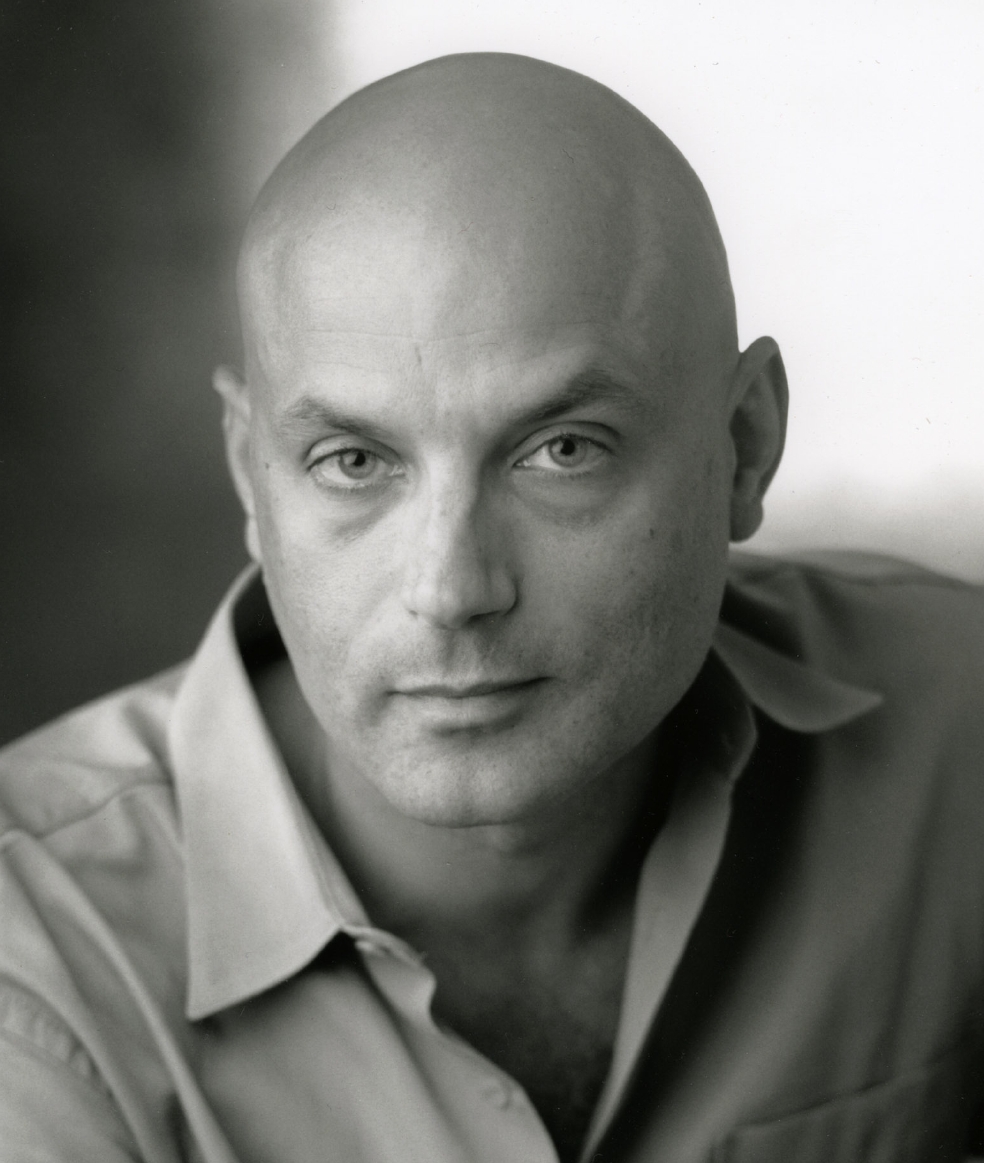
Daniel Mendelsohn

Photo credit:  Matt Mendelsohn


Lately, I’ve been reading Daniel Mendelsohn, a cultural and literary critic.  His books have ample essayistic criticism, but also personal history and metaphor.  He brings sharp, intelligent, and often witty writing that is always insightful and interesting to read.

Two particularly interesting pieces I found recently, one written by Mendelsohn himself, and the other, an interview with him posted December 25th, 2012 at Lambda Literary:  Celebrating Excellence in LGBT Literature Since 1989, demand careful examination.

“A Critic’s Manifesto” posted August 28th, 2012 on The New Yorker website, gives us both some personal history and Mendelsohn’s view of the role of the critic.  He learned his craft, he tells us, through reading.  Mendelsohn dreamed of being not a novelist or poet, but a critic, and he began his journey on the pages of publications like The New Yorker reading not just literary critiques, but those written about dance and opera and Mozart.  He loved Pauline Kael the most and saved her for last as he pored over the magazine before his father came home.  It was his subscription that young Mendelsohn borrowed.  “I thought of these writers above all as teachers,” he writes, “and like all good teachers they taught by example.”  He was impressed with the way these critics not only addressed the current work, but how the artist’s entire oeuvre fit into the humanistic body of art and the scope of history.  Good criticism resulted not from academic degrees, but from “a great love of the subject…taste, or sensibility.”  It was at the feet of these distinguished writers that he learned, for instance, that poetry was written to show us how to live.  His reading of these teacher-critics taught him how to think critically, “how to judge things” for himself.  “To think is to make judgments based on knowledge:  period,” he writes.

Mendelsohn is not impressed with the broadening out of criticism these days to include blogs and websites, which feature people with strong opinions but lack “the wider erudition…taste or temperament that could give their judgment authority.”  He includes academic scholars in this group, pointing out that they are “no good at reviewing for a mainstream audience.”  Is Mendelsohn’s stance sour grapes?  The market possibilities for professional critics have dwindled in recent years, and criticism is more democratic with the rise of online opinionating found at the bottom of every Amazon page.  However, there are excellent critics who don’t write for The New York Times and The New Yorker.  There is an immense value to reading writers like Mendelsohn and James Wood, another critic from The New Yorker, but it is also important to recognize that reading and books are still of interest to common folk.

Mendelsohn is not all negative on the citizen critic and the transformation of reviewing and criticism.  He makes it clear that two phenomena bear the responsibility for this sea-change.  One, the internet has made criticism of all stripes, short blurb to long-form, available to a mass audience.  Second, the “vacuous promotional exchanges of likes, links, and ‘favorites’ on social media like Facebook has led people to follow these digital bread crumbs to popular fare like Fifty Shades of Grey, God help us.

He goes on to talk extensively about giving a bad review, and why a critic should not just be a cheerleader for his subject.  Serious criticism demands serious intent.  The audience who reads criticism wants truth and clarity; it is the critic’s job to guide readers to what is important, not just popular.  He bemoans the rise of the false memoir, the exaggerated stories written by authors who pass themselves off as creative nonfiction composers but whose books belong shelved in fiction.  He attributes this “unprecedented explosion of personal writing (and inaccuracy and falsehood)” to online outlets like websites and blogs; and then there are the comment forums “where there are no editors and fact-checkers.”  It all balances out in the end.  How many of these fictional memoirs have been exposed for what they are over the last few years?  Many times, the unmasking of the fabulists comes at the hand of a blogger.  These online journalists working anonymously from their suburban bedrooms in the middle of the night for no pay have also broken some fairly large news stories.

In his interview in Lambda, Mendelsohn reveals what might be the root of his prejudice against online forums.  “I never feel like I’m publishing something if I’m publishing it online,” he writes.  “It doesn’t feel published to me…print feels more real to me.”  Mendelsohn needs to prepare himself for a future—actually it is a today—where online publishing will be the method of getting an essay into print and out to a wider audience, and magazines will be the niche market for a few thousand subscribers who like to collect paper.

Two other interesting notes from the Mendelsohn interview:  criticism, he believes, is being taken away from academia, and that academics are “people talking to themselves”; second, he believes the novel is over—“It’s so clear to me that the novel is a genre that has reached its final stages,” he writes.

On the first note, writing is created to be read.  Academic publishing of papers and journal articles has become a kind of Freudian envy of the other.  Why would a writer compose a piece in such esoteric and obtuse language to be read by the four other people in the world who have an interest, and the patience, to hack through the thicket of verbiage?  Academic editors and publishers wonder why audiences have dwindled?  The answer might be the writing itself.  I am not talking about “dumbing” a topic down—although that has certainly happened in this new paradigm—but what kind of effort goes into reaching an audience.  Most of the writing I read in the academic sphere seems more intent on trumpeting the author’s credentials and promoting the most extreme research topic, not on reaching real readers.

As for the novel, it is difficult to get behind fictional characters and events when real life has become so much more intense and interesting.  I do not think the novel will die, just as poetry has not disappeared and words for the stage have not been vanquished by television or movies.  It seems our culture is always announcing the death of something, but these art forms and literary genres continue.  Photography did not kill painting; movies did not kill stage craft; and the novel will go on.

So will Fifty Shades of Grey, but that, as they say, is another story altogether.


Books by Daniel Mendelsohn include:

Waiting For The Barbarians (New York Review of Books, 2012)
The Lost:  A Search For Six Million (Harper Perennial, 2007)