Tuesday, July 19, 2011

Lawrence Clark Powell


I have spent many wonderful hours in the Powell Library at UCLA, but I knew nothing about the man for whom the library is named until I found his books. I quickly pulled his books off the shelf and began a few days’ worth of rapturous reading, and even wrote about him in a previous post. I quickly realized that even though they were out of print, I wanted my own copies. So I scanned my usual used book outlets on the web and found clean copies to order. Now, after several weeks of reading each book and reveling in Powell’s delightful memories and prose, I am ready to say that these books need to go back into print, especially now that we face a budget crisis with libraries, public and private, and the art of reading seems to be migrating to electronic readers from the tactile pleasure of the physical book.

At his heart, Powell was a bookman, a lost breed of salesmen who knew their products and traveled the world buying up old and antiquarian books for their used book stores and libraries. Powell began his career at Vroman’s Books in Pasadena, California, an institution in Los Angeles having been around since 1894. It remains a vibrant and important place today after all the other great independents have gone out of business.

From selling books, Powell moved on to the UCLA libraries where he worked himself up through the ranks to head librarian and first dean of the School of Library Service. He felt that UCLA was the place for which he was destined, and under his leadership, the holdings of the library grew from 285,000 volumes to more than two million. He taught librarians across the country, and worked as an advisor to a number of university libraries who followed his example at UCLA and became important centers of learning and scholarship.

Although he wrote fiction, his métier was nonfiction books about books. I examined four of Powell’s works in particular, two books of memoirs and two books of essays. The man was, in addition to being a reader, a prodigious writer, publishing hundreds of articles and papers in journals and magazines about books, writers, and the literary life.

Fortune & Friendship: An Autobiography By Lawrence Clark Powell (R.R. Bowker Co) appeared in 1968. He begins at the beginning, detailing his early years in Washington D.C. with Quaker parents. In 1911, he moved to southern California where he grew up in the Pasadena area. Upon reaching maturity, Powell found his life’s work and began climbing the ladder at UCLA after studying at Occidental College, the University of Burgundy in Dijon, and U.C. Berkeley. When writing about books, Powell has no equal. However, the one problem I had with this book is that many of the people mentioned have dropped into obscurity now. Powell throws out names and book shops like a madman, and sometimes the stories could have been improved upon if he took some time to dig deeper into the experiences. There is a lot of “then we did this, and then we did that,” and although during the time of publication, many people may have known of whom he was speaking, readers today might need a bit more context. The book does work as a portrait of a life-long reader, and Powell’s love of the printed word always shines through in every story.

In 1986, Powell wrote a sequel called Life Goes On: Twenty More Years of Fortune and Friendship (The Scarecrow Press, Inc.). The edition I found contains a separate checklist of publications by and about Lawrence Clark Powell from 1919-1986. Here we see Powell in the twilight of his career, moving back and forth from Arizona and the American southwest to his home base of southern California. Powell wrote extensively about Arizona and his travels there. His life shifted in retirement from a guardian of books to a writer of books.

His book of essays, A Passion For Books (The World Publishing Co.), was published in 1958. All of these pieces originally appeared elsewhere in such publications as Antiquarian Bookman, AB Bookman’s Yearbook, or as lectures given across the country and later composed into essay formats. In his Preface, Powell writes: “These essays on the art of librarianship were written from 1948 through 1957. Some were intended to be spoken to library conferences; others were meant only to be read.” Powell is able to meld travel and life experience with his reading experiences, and that is what makes this book so readable and enjoyable. He discusses some of his favorite authors, and explains how he searches out rare books for his libraries. The passion in his title is clear on every page, and this book has special appeal to those of us who remember how we came to love the heft and feel of a book.

Books In My Baggage (The World Publishing Co., 1960) is really a travelogue through the world of books and people. Of special interest is what Powell calls his “biblio-geiger counter,” a tingling in his fingertips when searching in a dank cellar or drafty estate somewhere and he realizes something of rare and exquisite value is nearby on a dusty shelf. He takes us through how he manages to scoop up these rare artifacts without letting the seller know he is interested. It is the joy of the hunt that comes through Powell’s every line. The book also addresses a few of Powell’s favorite writers, Robinson Jeffers, Henry Miller, and J. Frank Dobie. For native Los Angelenos, it is interesting to note that Miller and Powell were neighbors up in Beverly Glen, a hilly canyon behind the UCLA campus that connects Westwood with Sherman Oaks. Powell also tells us some moving, poignant stories here. In the essay, “Speaking of Books,” he writes of a student with whom he works in the library order department. The boy is a track star, a discuss thrower, who moonlights unpacking the shipments of books that come to the library each day. The boy discovers just who Powell is when he stumbles across an article written and published in a journal. They strike up a friendship. Powell writes: “That was the first of many conversations we had before he was called to duty in the navy. I learned that this lad was akin to Thomas Wolfe, in that he wanted to be a writer in order to release the immense feelings and desires that were locked up inside himself. He would have become a writer, I am sure, and possibly a good one, if he had lived. He was killed in the Battle of Leyte Gulf.”

Lawrence Clark Powell is a writer of uncommon grace and goodwill. Books were his world, and he brought them to us in our everyday lives. Just last evening, I heard on the news that public libraries will now be open on Mondays here in Los Angeles thanks to a ballot measure. This means more access for those who need books and a place to study, and more jobs for librarians to staff the additional days. Libraries are democratic institutions, and they are imperative to our democracy. Lawrence Clark Powell made this his life’s mission, and I cannot help feeling his spirit beckoning me into the stacks, to read, gently reassuring me that my love for books is a good love, and must be nurtured.




Friday, July 8, 2011

Literature, Television, and the Genius of David Simon


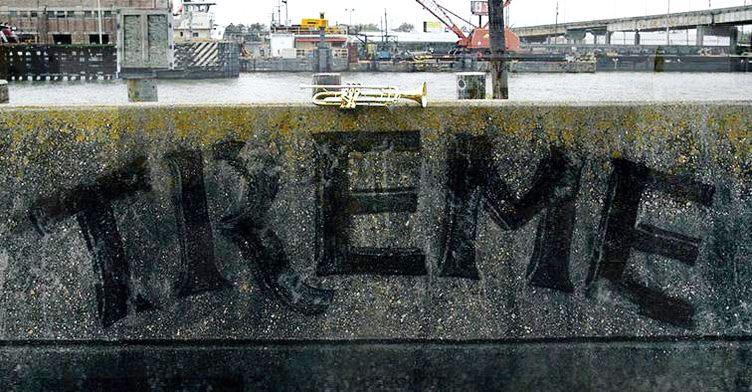
Critics like comparing television writer-producer David Simon to Charles Dickens; they marvel at the way Simon serializes his stories across multiple episode arcs. They love to call his characters “Dickensian.” But Simon is in a class by himself, a man who creates and writes shows that offer social commentary and cultural criticism as well as intriguing and compelling stories. Calling him the second coming of Charles Dickens is meant as a complement, but it is unnecessary. David Simon is a unique genius who makes television dramas that should be classified as literature, pure and simple. His latest effort, HBO’s Treme, continues this tradition.

Treme is set in a neighborhood of New Orleans circa 2005, a culturally rich and diverse place nearly destroyed by Hurricane Katrina. The first season of episodes took place only a few months after the disaster. The recently completed second season found the characters more than a year on and still struggling with the effects of the storm. Simon and his producing partner Eric Overmyer created a cast of characters from every walk of life in the city who are interesting to watch, but the show is truly rooted in the music and culture of New Orleans. The camera lingers on the beautiful decadence, the gothic squalor of the city. They construct visual feasts of graveyards, Mardi Gras celebrations, second line parades, homes and businesses filled with mold, and piles of muddy rubble. When a young boy blowing a trumpet wanders through the detritus of the lost city in the second season opener, we see the glimmer in the muck, the ray of hope in a storm of trouble. The show is transcendent in a way no American television production has ever been, at once native and elemental yet heartfelt and incendiary.

As with previous Simon productions like The Wire (also HBO, 2002-2008), the stories unfold slowly. Scenes sometimes have no dialogue. The writers do not pander to their audience—one must listen closely and pay attention. The writing is nuanced and subtle, but viewer beware. Events can transpire in a gut-wrenching moment, as when a street musician played by the legendary Steve Earle is gunned down by a mugger. Or, in the first season when community leader, Big Chief Albert Lambreaux (played by Clarke Peters) discovers the decomposing body of a close friend under an overturned boat in a shed.

Simon makes it clear that this show will not fall back on stereotypical television tropes—cops, lawyers, or doctors—although, Treme characters include a lawyer, and this season, a deeply troubled cop. Story lines carry over an entire season, and characters come and go, relocating to other cities and even to the grave, but always remaining connected to New Orleans. One such example is novelist Creighton Bernette, played by John Goodman, who commits suicide at the close of season one after the audience has followed his journey through rage and impotence over the fate of his beloved city. The suicide itself could easily be missed—he stands smoking at the rail of a ferry boat, the camera pans away and back, and Goodman is gone—but the emotional fallout for his wife and daughter permeates the entire second season. Goodman only appears in a dream sequence during a single episode in season two.

Bernette’s wife and daughter are portrayed radiantly by Melissa Leo and India Ennenga. Leo does work worthy of Greek tragedy—subtle, quiet, inevitable and yet forceful, conveying a range of emotions in eyes of dark uncertainty, feeling her way through the anger and sadness. She must deal with her husband’s act of abandonment and fight for her clients as a civil rights lawyer and police watchdog. But Simon is true to his word about those tropes. Toni Bernette is the moral voice in the wilderness of civic corruption, less bombastic than Goodman’s character, but Leo plays Toni razor sharp and resilient. Her husband may have given up, but she will not.

Wendell Pierce and Steve Zahn play loveable shlubs who work the music scene. Pierce’s character is the womanizing trombone player Antoine Batiste, an imperfect man who struggles, often comically, to make ends meet. His stories this season as he mentors young musicians as a music teacher have been especially good. Zahn’s zany D.J. Davis McAlary can be annoying and profound in the same scene. I found his character tiresome last season, but Zahn found his grounding with the character this year, giving us much to love and empathize with in this frustrated musician.

Treme’s cast is a large and talented ensemble: Kim Dickens as a struggling chef; Khandi Alexander as a bar owner, and this season, a victim of a violent and brutal crime; Rob Brown as a trumpeter trying to balance his New Orleans roots with his New York jazz sensibilities; Lucia Micarelli as the beautiful and sad violinist; and Michiel Huisman as the troubled Sonny. This season, Simon added David Morse and Jon Seda to the cast. Morse is the aforementioned police officer sickened by the negligent corruption of the NOPD. Seda comes to town a modern-day carpetbagger looking to score on the misery and destruction of the hurricane aftermath.

In some episodes, music runs through nearly every scene, and all kinds of famous and not-so-famous New Orleans musicians make cameos and even guest starring stints. The stories pulse with the music, from live performances to radio, CDs, background and foreground score. It is clear that music and New Orleans are synonymous, the blood and tissue of the larger body. The soundtrack for this show is epic, and the music is alive and organic. In Treme, music and storytelling are inseparable.

That a show of this complexity and nuance would struggle for viewers is to be expected. HBO is a premium channel, which excludes many customers right from the start. That Treme is so different from basic cable and network shows might also put some people off. But HBO should be applauded for keeping Treme on the air. Quality television, like good literature, sometimes takes time to find an audience. Indeed, Simon had his doubts that Treme would be picked up for a third season. He wrote the second season finale as a possible final episode for the series if HBO did not come through with a renewal. They did, as cast and crew were wrapping the last episode. So we can anticipate a return to New Orleans in time for Mardi Gras.

Of course, Simon probably takes uncertainty in stride. His previous shows, all excellent, were not ratings blockbusters. Homicide: Life on the Street (NBC 1993-1999) led a constantly threatened existence; The Corner (HBO, 2000) was critically acclaimed; The Wire had a small but loyal following; and Generation Kill (HBO, 2008), a nonfiction miniseries, utilized many of the hallmarks of fictional storytelling. Simon has made a career out of turning journalism, much of it his from the time when he was a reporter in Baltimore, into quality television literature. He proves the adage that great storytelling can be journalism or fiction, as long as it is interesting and compelling.

With any luck, Treme will be with us for many more seasons. In this series, Simon celebrates the rich decay, sordid beauty, and grotesque poetry of an eccentric city and its denizens. New Orleans has a resilient and intriguing culture, a people unbowed by tragedy who continue to sing songs and blow trumpets in the mossy swamp of a graveyard we call life and all that jazz.


Here's "Oye, Isabel" by The Iguanas featured in the second season finale of Treme.

Wednesday, June 29, 2011

The Deal From Hell


According to journalist James O’Shea in his new book, The Deal From Hell: How Moguls and Wall Street Plundered Great American Newspapers, there is no shortage of bad guys in the epic story of the decline of newspapers. This is especially true in the case of the Los Angeles Times, a paper once edited by O’Shea. His is a fascinating, riveting tale, especially for those of us alarmed by the disintegration and rapid decline of print journalism. These days, newspapers are becoming relics of yesteryear, archaic artifacts for the culture museum, a disturbing development for journalists and readers who once created and consumed the insightful, in-depth reporting found on those ink-stained pages of newsprint.

In his book, O’Shea is self-effacing, attempting to be clear-eyed and forthcoming about his own role in the L.A. Times disaster. But make no mistake; he had a major part in the trials and tribulations of the paper during those days, and The Deal From Hell is his rationalization and defense of his own participation in the difficult decisions made during that time. The editor-in-chief of a major metropolitan paper once wielded great power in matters of politics, culture, and civic life. With the rapidly declining powers of his office, O’Shea could not save the paper and restore it to its former glory of the years under journalism titan Otis Chandler. He fights the good fight, but is simply another middle manager subjected to the whims of vacuous corporate executives.

O’Shea makes it clear that the overall decline of print journalism is not easy to diagnose, nor can blame be assigned to a single phenomenon in our culture. He believes that the shift of newspaper ownership from privately owned family businesses to public corporations traded on Wall Street has much to do with the decline. He singles out old-school journalists who resisted change as another problem, as well as the changes in the working lives of Americans, the lack of disposable leisure time, the rise of cable TV news channels, and plain old problems with delivery. In the story of the Times Mirror-Tribune merger that crippled a number of print outlets in addition to the L.A. Times, O’Shea cites a focus on continuing to increase profits over serving the public good as the central cause for the paradigm shift.

O’Shea quotes Frank Knight, part of the Knight Ridder newspaper empire, who says that print journalism is a tricky business because it is really four businesses in one: editorial content, which should have top priority; the business side, including advertising; production; and distribution. Each area has its own pitfalls and danger zones, but O’Shea believes when the walls between the business side and the editorial side break down, major problems ensue.

Never was this breakdown more apparent than in the infamous Staples Center-Sunday magazine scandal. The Staples complex is a 400 million dollar sports and entertainment venue in downtown Los Angeles. The Times entered into an agreement with the Staples organization to publish a 168-page Sunday magazine section featuring a series of puff pieces trumpeting the grand opening of the center. The paper and the management of Staples agreed to split the ad revenues from the publication, thereby obliterating the line between journalism and advertising. Articles became ad copy, not objective reporting, and this was only the beginning. The Times now wraps major movie ads around the paper as faux front pages, complete with same style, type and layout of the real front page underneath, confusing readers with ads that look like news. O’Shea takes pains to point out that newspaper front pages are sacred cows in journalism, the one place in the paper that readers can expect no ad placement, only the top stories in the news.

O’Shea gives us more than a peak behind the scenes of the L.A. Times-Tribune merger and subsequent sale. He rips the cover off and exposes the soft, white underbelly of the deal, detailing the legal maneuvering, the surviving Chandler family members’ greed, the incoming executives’ sexual misbehavior, and the pornographic excess of bonuses and payouts, a golden shower of parachutes as CEOs and corporate officers raped and pillaged the company they were supposed to serve and then bailed, leaving behind a sinking ship.

The most evil of bad guys is Sam Zell, real estate cretin and hero of the unwashed counterculture posers. He passes his ignorance off as outside-the-box thinking, but it is clear he had it in for journalists from the get-go, a caste of public servant for which he has only loathing and disgust. He buys Tribune to dismantle it, and it remains to be seen if this foul-mouthed, snake oiler with deep pockets gets what he deserves as the story winds its way through bankruptcy court.

Where O’Shea goes a bit hysterical is in his negative assessment of bloggers and news aggregate websites like LAObserved. Yes, there is a lot of hot air blowing across the blogosphere, but arguably there are bloggers who have broken major stories and who do follow the precepts of journalistic integrity. News aggregate websites like LAObserved actually spread the good work of journalists in print and on the internet, bringing readers to news sites and journalism publications. O’Shea attacks LAObserved editor Kevin Roderick for doing his job and publishing revealing memos and missives from Times editors, but it seems like sour grapes when a life-long reporter and secret-sharer like O’Shea complains about having his own secrets revealed. Did he really think his actions should be off limits to public scrutiny? His whining in this part of the book is disingenuous to say the least.

The Deal From Hell is an intense and interesting piece of work. O’Shea’s years as a reporter and his participation in the events described in the book make him uniquely qualified to tell this story. He does an excellent job of explaining the complex financial dealings of the merger and the details of each step and term of the process. If journalism is the first draft of history, James O’Shea has moved us forward into the realm of understanding as we are faced with a less knowledgeable future here in the dark ages of the alleged information revolution.

Friday, June 24, 2011

"RIF Now, Pay Later"


Check out these kids from Roy Romer Middle School in North Hollywood, California.

Tuesday, June 21, 2011

Leonardo's Legacy


Every evil leaves a sorrow in the memory except the supreme evil, death, and this destroys memory itself together with life.”

Leonardo Da Vinci

Do we really need another book about Leonardo Da Vinci?

Here’s a guy we cannot categorize. Was he an artist? Painter or sketcher? Was he a designer of machines, of flying contraptions that bear a passing resemblance to a helicopter or hang-glider? If so, did he ever actually build a working model of any of his designs? Was he an anatomist, and more importantly, did he break medicine’s strict code of ethical behavior by stealing bodies upon which to do postmortem experiments in hidden laboratories late at night? Is he the ultimate Renaissance man, or someone with an epic case of Attention Deficit Disorder? How do we evaluate Leonardo Da Vinci?

It is because of these questions and the endlessly fascinating person of Leonardo that we, in fact, do need another book about him. German science writer Stefan Klein does a good job in his latest book, Leonardo’s Legacy: How Da Vinci Reimagined the World (Da Capo Press, 2010) of not giving us just the warmed-over bits from urban legend and myth; he gives us the truth and cites some new information and analysis about Da Vinci’s life and work.

As translated by Shelley Frisch, Klein focuses on Da Vinci’s notebooks and sketches. He portrays him as an experimental artist, a scientific and engineering genius whose best and most forward-thinking work was done in voluminous notebooks and on what we might call today, “scratch paper.” He ingeniously groups his chapters not in a strict chronological order, but by Da Vinci’s focus. “The Gaze” develops an analysis on the beguiling and ever-popular Mona Lisa. “Water” brings us numerous sketches on how water flows and moves with notes written in mirror reversal to accompany the drawings. Da Vinci’s less explored affinity for weapons of war and his contradictory belief in peace are examined in the chapter, “War.” Of course, Klein also gives ample attention to Da Vinci’s “The Dream of Flying,” his construction of automatons in “Robots,” and his intense study of anatomy in “Under The Skin.” Da Vinci’s apocalyptic visions are saved for the chapter, “Final Questions,” before Klein delves into his title, “The Legacy” of Leonardo.

What makes Klein’s work here unique is that we get some of his research experiences along with the results of his study. We learn that the House of Windsor owns a treasure trove of Da Vinci’s manuscripts, and that Bill Gates possesses the Codex Leicester for which he paid thirty million dollars at an auction, the highest price ever paid for a book. In fact, one of the more interesting parts of Klein’s journey is his opening explanation for how the world came to possess the sketches, paintings, and notebooks we have all seen either in person or on the pages of books and the internet. Da Vinci’s student, Francesco Melzi was entrusted with a trunk filled with his teacher’s work. The luggage was so heavy, Klein tells us, that two men were required to lift it. Melzi took it back to Italy after Da Vinci’s death in France, and guarded it with his life. He began work cataloguing and organizing the disparate notebooks, sketches, random pieces of paper, and works-in-progress, but realized he would not finish in his lifetime. He employed secretaries to whom he dictated Da Vinci’s ideas, but still, time was running out. “When Leonardo’s star pupil dies of old age in 1570,” Klein writes, “his son Orazio proved indifferent to his father’s passion. He let the plunderers have at the collection.” Household help stole manuscripts and books. Pages were torn out and pasted back together out of sequence. In the end, Da Vinci’s works were spread all over the world missing vital connections and coherence. It has been left up to Da Vinci scholars to piece the puzzles back together and restore at least some of his work to its original condition.

Klein also explains some of the behind-the-scenes information beyond what Da Vinci left on his pages. He says the great man always had a notebook with him, and he believes that he actually carried one on his belt at all times. He noted everything he saw and observed, even something as simple as how water flowed down a river, swirling in eddies around rocks. When Da Vinci was dissecting human cadavers, a practice that was not necessarily legal both under civil and religious law, he made deals with hospitals to take the bodies at night to basement rooms to cut, parse apart and examine nerves, tissues, and organs. Some body parts simply would not cooperate. Da Vinci boiled human eye balls in egg whites so that the gelatinous mass would hold together to be transected for examination. Those prophetic flying devices resembling modern helicopters, hang-gliders, and even the wings of jumbo jets were not just sketches and theoretical models. Klein believes that at least some of them might have been built and tested, possibly with disastrous results. His research on Da Vinci takes him to Bedfordshire, England where on an abandoned farm, “seven men who enjoy tinkering with aviation devices are spending their days assembling historical flying machines using original parts.” Original in this case means native to the fifteenth and sixteenth century. Using Da Vinci’s sketches, they have built a giant crossbow, a weapon of war, as well as a 30 foot wide wing that world champion hang-glider Judy Leden sailed down a hill, landing on her feet in an exhilarating if brief trip.

Leonardo Da Vinci is, in the best sense of the term, a classic idea man. He is the embodiment of the Renaissance individual, a student educated in a broad range of subjects. Born illegitimate, Da Vinci went on to revolutionize art and observation, science and technology. He anticipated later discoveries often by centuries, not just a few years. He is a unique character in history, a complex human being unlike any who came before, or have come after. Da Vinci thoroughly explored his world leaving no subject unexamined. Stefan Klein brings us the man and his incredible mind without delving too deeply into the more gossipy facets of his life. He does clarify who he thinks was the model for the Mona Lisa, and touches briefly on Da Vinci’s sexuality, but he saves the majority of his pages for an examination of the artist’s ideas. He includes an annotated timeline, bibliography, end notes, gray scale drawings and renderings of paintings, and an index as well, although it would have been better if the plates were in color. Still, we get a good discussion of what Da Vinci thought about and discovered.

As sure as the voyages of Columbus and Magellan opened doors to the greater world, Leonardo Da Vinci crossed the frontiers of science, technology, and the breadth of the human mind. He brought an artist’s sensibility to a scientific study. In all this talk of boosting science and math education, we would do well to follow Leonardo Da Vinci’s example and open our eyes to the subtle connections among ideas, disciplines and life forms, while keeping our sense of awe and wonder at the precise and intricate beauty of our ever-changing world.

Tuesday, June 14, 2011

Bewitched, Bothered and Bewildered


I have spent some time in this early summer thinking about evil. The days are gently warm, the air is pure, and the landscape lush. It seems like Satan and the nature of evil would be better suited to late summer when the heat is a furnace blast, the mountains around Los Angeles are dried to a crisp and a raging inferno seems imminent, making us believe that the end of times is near.

I checked out a number of books from the library to do some background reading on the subject. Of particular interest was John Demos’ book, The Enemy Within: 2000 Years of Witch-hunting in the Western World (2008). Demos has made a study out of the history of early America, and considers witchcraft an integral part of that history. In this book, he traces the rise of witchery in Europe and its journey to America with the Puritans. He also discusses some modern witch-hunts. The book covers quite a broad scope, a swath of human evil and devious behavior all in four sections: Europe, Early America, Salem, and Modern America. His work is exhaustively researched and rendered with a clear and vibrant eye.

Demos is at his best when presenting the stories of witchcraft and then analyzing them for their factual content and truth. He dispels the rumors and clarifies the legends. In this way he presents us with a clearer idea of what went on in those Puritan courtrooms and halls of inquiry.

In the first section, Demos deals with the prosecution of witchcraft in Europe. I found the chapter that explained the Malleus Maleficarum to be utterly fascinating. This is the book written by a Dominican priest named Heinrich Kramer, also known as Institoris. He composed the book in Latin around 1486. In it, Kramer details his investigation into charges of witchery in the German town of Ravensburg near the Swiss border. Although Demos assures us that Kramer’s was not the first book on witchcraft, it is the definitive text that religious officials used during the late 1600s, a period of intense witchcraft allegations, trials, and executions.

Of course, to anyone who has taught or read Arthur Miller’s The Crucible, the section on Salem, Massachusetts is gripping. Demos sketches out the history of poor, saintly Rebecca Nurse, a woman who against all evidence to the contrary was found guilty of witchcraft and executed. He also profiles Cotton Mather. In the Salem Witchcraft Trials of 1692-93, Mather was a controversial figure who claimed success in curing people accused of witchery, usually teenage girls whom he took into his home for intense prayer and meditation. This of course led to rumors and gossip about his methods, but he claimed he had to study the victims up close to gain an understanding of their afflictions. We discover in this section that other characters from Miller’s play also were true to life: Giles Corey was actually crushed to death in an ancient procedure known as peine fort et dure. “He was laid flat while large stones were piled on his chest.” Reverend Hale, Ann Putnam, Goody Proctor and John Proctor all had familiar roles and met similar ends in real life as they did in the play, although John was not a farmer but a tavern-keeper.

Demos dispels many of the urban legends and attempts to explain witchcraft as a phenomenon. He tells us that a theory in the 1970s that the behavior was caused by ergot fungus poisoning is not plausible when compared to the facts in the historical record. He also explains how the Enlightenment thinking of Francis Bacon, Rene Descartes, and Isaac Newton helped to negate some of the hysteria by advancing scientific knowledge and introducing a healthy skepticism into the culture. “The momentum for prosecution did not collapse all at once,” Demos writes. “Rather, it disintegrated piece by piece, day by day, person by person.”

Demos takes pains to tell us that the idea of a witch-hunt continues today. He discusses the anti-Freemason movement of the nineteenth century, the red scare and rise of McCarthyism in the twentieth century, and the more recent McMartin preschool case as examples. He presents and picks apart in detail the Fells Acres Day School abuse case in Malden, Massachusetts, ironically the site of early witchcraft prosecutions. The hallmarks of these modern cases are leading questions of child victims, the fantastic stories spun by those victims many of which defy logic or coherence, and rabid hysteria in the face of factual evidence. The story of witchcraft and a history of Satan usually includes a deviant sexual component, so the fact that modern witch-hunts involve sex crimes is not all that different from the witchcraft prosecutions in history.

I would highly recommend Demos’ book for those reading or teaching the Arthur Miller play. Students who have a nose for the macabre will appreciate the information that Demos presents, which is of a kind not fully explored in most history books. Demos does occasionally bog down the flow of the story with a little too much dogmatic research, but he presents a thorough and complete picture of witchcraft and its history. In the end, the witchery is far less hair-raising and more tragic in its impact on the innocent victims accused of the crime. The story makes for a clear window into the psyche of human beings detailing their ability to buy into the supernatural over the rational, and revealing the normal human predilections for jealousy, greed, and power of which our history is so rife to be the true cause of this most heinous miscarriage of justice in our history.

Illustration: Gustave Dore’s The Harpies’ Wood, from Dante’s Inferno

Wednesday, June 8, 2011

If Disney Designed A Villa


Unlike the Getty Center in the Sepulveda pass, the Getty Villa in Malibu requires some pre-planning for admission. Parking reservations are required, and can be made online. This was easy enough, even the day before the time we wished to visit. However, there were other issues. One must arrive at the villa while traveling northbound on Pacific Coast Highway. No turns permitted from southbound lanes. And don’t be more than ten minutes late or the reservations expire.


So there we were with our internet tickets making the turn into the driveway across from Malibu beach. I noticed two workmen in orange vests, but as they seemed to be adjusting traffic cones, I decided to continue on to the guard shack further up the hill. One of the cone guys yelled at me, so I quickly braked. “You need to stop here, buddy,” he said. I stared at him a beat while he continued to fumble with the cone. “Okay, go on up to the guard booth.” I was not sure why he required me to stop.


The museum is technically free, but parking is fifteen dollars. So my car must pay an entrance fee, but we humans go free. We parked and began the steep climb into the villa proper. Everything had been remodeled since my last visit. There were endless stairways, elevators, and paths leading up, up, up. Originally designed by the architect Stephen Garrett, the museum is a replication of a real Italian villa buried in the volcanic eruption near Vesuvius in 79 A.D. According to the video on the website, Garrett and oil baron J. Paul Getty copied the original villa’s Bay of Naples architecture when they began construction in the 1970s. Getty, however, never saw the finished product; when the museum opened, he was living in England and died there in 1976.


The 1997 renovation was a way of defining the new Getty Center in the pass while redefining the scope and purpose of the original museum in Malibu. The Getty Trust decided to make the Malibu location the home of the antiquities collection. They added a Greek-styled amphitheatre, a separate bookstore, and a new café, among other things. They set the place up to resemble an archaeological dig, hence all the stairways and scaffold-like design features. The new and improved villa seems too perfect. The frescoes and colors are too bright, resembling a Disney version of a 2000 year old Italian villa. The antiquities are installed indoors thematically, which makes sense, however, something felt like it was missing. The collection seemed sparse. The statues outside are replicas of those found at the excavation site in Italy, and what is most striking about them are their eyes. They penetrate like laser beams from the black sculptures. They are a bit creepy, even in a museum that is itself a lost world of a previous millennium.


The most off-putting aspect of my day at the villa, though, was the crowd.  People in Los Angeles and people who travel to Los Angeles, seem to have no concept of etiquette or manners.  Kids run through the grounds and exhibit halls screaming.  Parents take photographs of their kids splashing in fountains and with arms around the replica sculptures.  One group did a portrait peeking out from behind a pillar.  In a small alcove with a fountain, a mother watched while her son yanked on the water lilies blooming on the water’s surface.  Everyone, everyone, wanted to touch things.  Museums are for viewing things, people.  If your kid wants to swim in the fountains or fondle the statuary, take him to a public pool or Hollywood.  He can splash away and I am sure someone on the boulevard will let him cop a feel.


There was literally nowhere to go in some areas with people crowded around snapping pictures, and doing that most ridiculous of tourist acts:  making a video of a sculpture.  The thing does not move.  Yet several cameramen were crowded around with their iPhones and Sony Handicams filming the stone-faced Greek god.  I pity the friends of those poor shlubs when they get back to wherever they call home with their exciting movies from the big trip to L.A.  “Here’s Aphrodite standing in the gallery.  Ain’t she a looker!”


I am tired of seeing people at cultural landmarks in Los Angeles behaving badly with no idea what the hell they are doing there. “We’ll do Disneyland on Wednesday, the Hollywood Bowl on Thursday, and finish the week at the Getty.” Go, go, go! What does a howling brat in a stroller appreciate in 2000 year old statuary? And why do the parents insist on continuing to look at the art and discuss it over the banshee wailing of their child? And what a discussion: “Look, Irma, that one ain’t got an arm.” Or, “Mommy, that statue of the man is missing his wiener.” Or my favorite: “Hey run up ahead and see if the snack bar has funnel cake.” Do they think they are at the county fair? Are they waiting for the livestock auction, the awarding of the judges’ prize for best squash?

The Getty Villa is a beautiful place, the way people in Los Angeles are beautiful until you get up close. Then, in the harsh southern California sunlight, something does not seem right. Things just do not seem real. They are too perfect. The Getty Villa is a museum that has had one too many facelifts. But hey, what the hell. It’s free, only the car has to pay, and the kids can run around for a few hours, up and down the endless stairways, through the amphitheatre, and over to the snack bar for some nachos. “Whaddya mean you only sell a cheese plate? What kind of hoity-toity place is this?” There are some nice statues and grandma can throw coins in a fountain or two while junior rips up the flora and fauna. If they’re lucky, they can still make Grauman’s Chinese Theatre before sundown.